How the spring mechanism led to three new technologies on display at the Cromwell Museum
In the 1600s the spring mechanism emerged as a vital component in developing new technologies. The spring coil works when it is wound up or compressed storing energy and when it releases energy it unwinds. Though spring coils were first used in places like China, Europe began to use it for new technologies such as door locks, watches and flintlock muskets. At the Cromwell Museum we have three pieces on display that were developed using a spring mechanism.
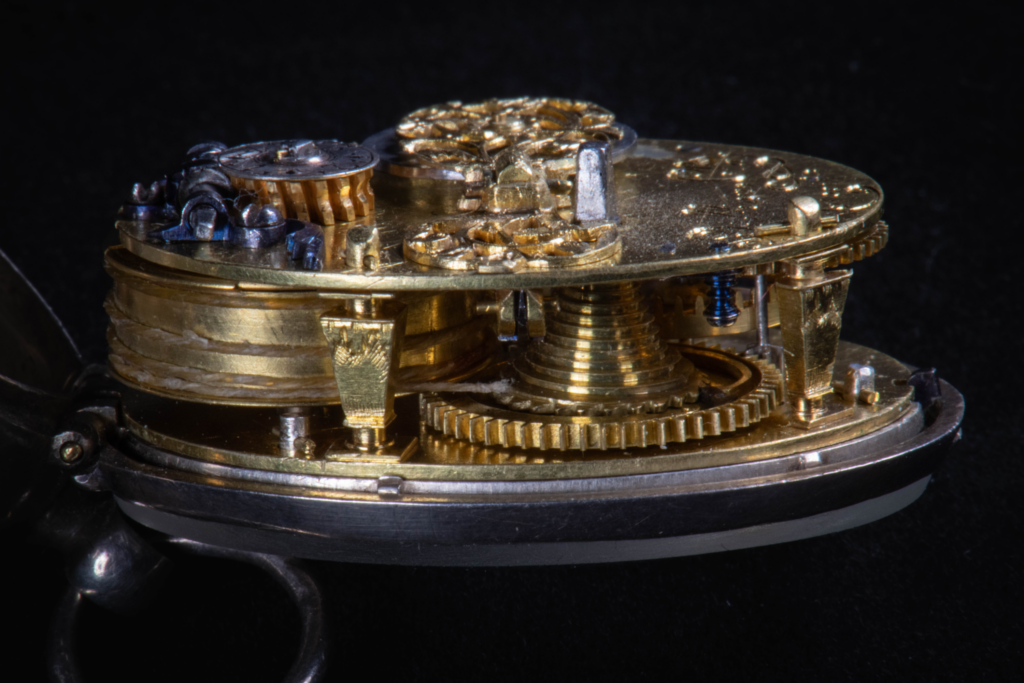
The watch was made by a man called William Clay who lived a couple of doors away from Cromwell when he lived on King Street at Westminster Abbey. The spring mechanism on Oliver Cromwell’s watch consists of the mentioned coiled spring with a train of wheels and an escapement installed between two plates. To even out the spring’s changing force, a device called a fusee was placed between the spring and wheels that drove the hand of the watch and the fusee would help the watch give some accuracy on the telling the time. This watch couldn’t have been created without the coiled spring due to it allowing watchmakers in the 1600s to create more portable and accurate timekeeping devices.
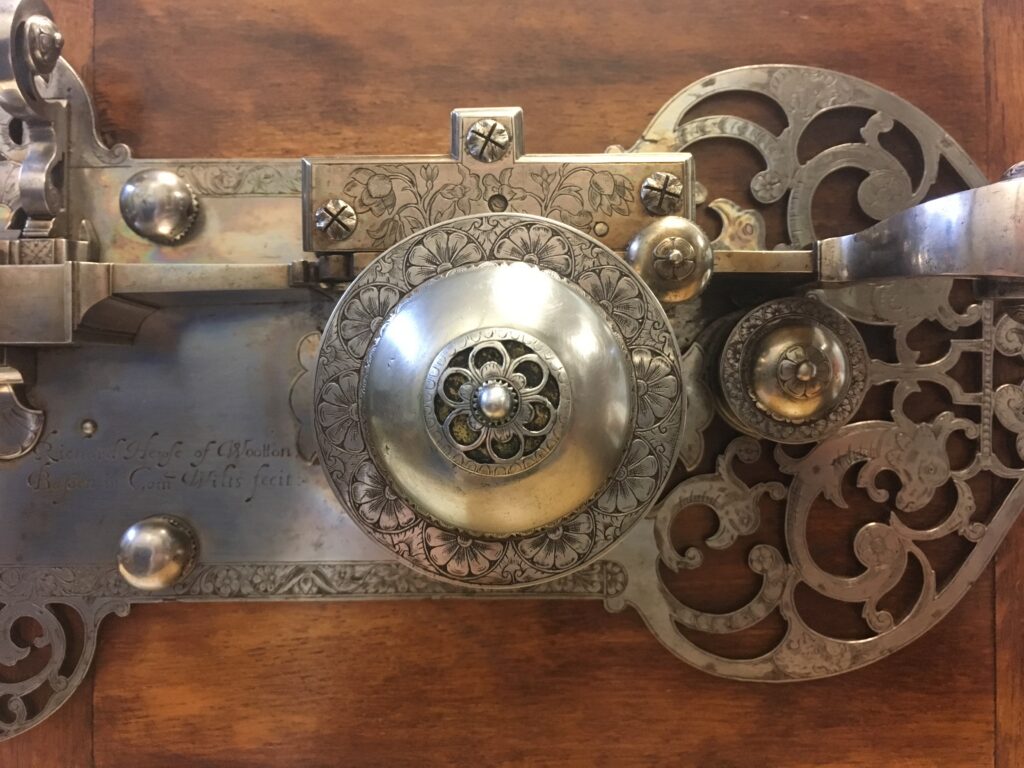
The creation of the spring also led to inventions being made like the spring-powered door lock that was seen in Oliver Cromwell’s bedroom at Hampton Court. The lock was designed by a skilled Wiltshire gunsmith, watchmaker and locksmith called Richard Hewse. Hewse would adopt a spring mechanism like the one used on Oliver Cromwells watch to be used on the door lock that could be closed by a lever on the bolt from the inside and by use of a key from the outside. This shows how sophisticated inventions in the 17th century became due to the spring mechanism found in watches and door locks.
In the 17th century, muskets evolved and improved due to the spring mechanism being incorporated into the design. This made the musket much faster in terms of firing and reload speed. Early matchlocks relied on this simple mechanism but later on the snap matchlock introduced powerful and durable springs that controlled the movement of firing parts. These springs allowed the rifle to hold tension and release energy quickly improving its performance in the battlefield. This would help to develop the flintlock design which fired by using a spring -loaded hammer design that would strike a piece of flint to create sparks, removing the need for a burning match cord. The flintlock quickly became one of the most important military developments of the 17th century.
Written by Ruben Viera, Year 12 Work Experience Student, 2026.