Key Events
Date
May – June 1639
First Bishop’s War
April 1640
Short Parliament
August 1640
Second Bishop’s War
November 1640
Long Parliament
Summer 1641
Catholic Rebellion in Ireland
November 1641
Grand Remonstrance
4 January 1642
Arresting the 5 MPs
March 1642
Militia Ordinance
April 1642
Seize the arsenal at Hull
22 August 1642
War on Parliament
23 October 1642
First Battle at Edgehill
Spring 1643
Sieges and Skirmishes
13 July 1643
Battle of Roundaway Down
August 1643
Alliance
20 September 1643
First Battle of Newbury
2 July 1644
Battle of Marston Moor
September 1644
Surrender at Lostwithiel
Autumn 1644 – Summer 1645
Royalist Victories
6 January 1645
New Modelled Army
3 April 1645
Self Denying Ordinance
14 June 1645
Battle of Naseby
Autumn 1645 – Spring 1646
New Modelled Army
13 September 1645
Battle of Philiphaugh
6 May 1646
King Charles I Surrender
November 1647
King Charles Escapes
17-19 August 1648
Battle of Preston
January 1649
King Charles I Execution
August 1649 – May 1650
Cromwell in Ireland
3 September 1650
Third Civil War
3 September 1651
End of the Third Civil War
Date
Date
May – June 1639
First Bishop’s War
April 1640
Short Parliament
August 1640
Second Bishop’s War
November 1640
Long Parliament
Summer 1641
Catholic Rebellion in Ireland
November 1641
Grand Remonstrance
4 January 1642
Arresting the 5 MPs
March 1642
Militia Ordinance
April 1642
Seize the arsenal at Hull
22 August 1642
War on Parliament
23 October 1642
First Battle at Edgehill
Spring 1643
Sieges and Skirmishes
13 July 1643
Battle of Roundaway Down
August 1643
Alliance
20 September 1643
First Battle of Newbury
2 July 1644
Battle of Marston Moor
September 1644
Surrender at Lostwithiel
Autumn 1644 – Summer 1645
Royalist Victories
6 January 1645
New Modelled Army
3 April 1645
Self Denying Ordinance
14 June 1645
Battle of Naseby
Autumn 1645 – Spring 1646
New Modelled Army
13 September 1645
Battle of Philiphaugh
6 May 1646
King Charles I Surrender
November 1647
King Charles Escapes
17-19 August 1648
Battle of Preston
January 1649
King Charles I Execution
August 1649 – May 1650
Cromwell in Ireland
3 September 1650
Third Civil War
3 September 1651
End of the Third Civil War
Date
The first major battle of the First Civil War at Edgehill in October 1642 was indecisive, and showed that neither the Royalists or the Parliamentarians had a clear advantage, that the war was not likely to be won quickly.
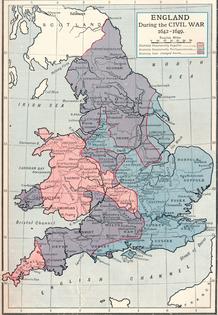
Both sides had their victories, although the Royalists seemed to win the most battles during 1643. This began to be reversed with the Parliamentary victory at the Battle of Marston Moor near York in July 1644. The Royalists lost two armies and effective control of the north of England, although this was to some extent negated by the surrender of a Parliamentary army at Lostwithiel in Cornwall in September.
The stalemate paved the way for the reform of the parliamentary armies. Cromwell and others in the army and Parliament pushed for a ‘Self Denying Ordinance’ in the winter of 1644, where officers in the Parliamentary forces were appointed on merit rather than their social status or military connections. This then led to the creation of the New Modelled Army in April 1645, a single, professional standing army, which won a decisive victory at the Battle of Naseby in June 1645. As a result, this proved to be a turning point in the war and led to a string of victories that forced the King to surrender to the Scots at Newark on May 5, 1646.
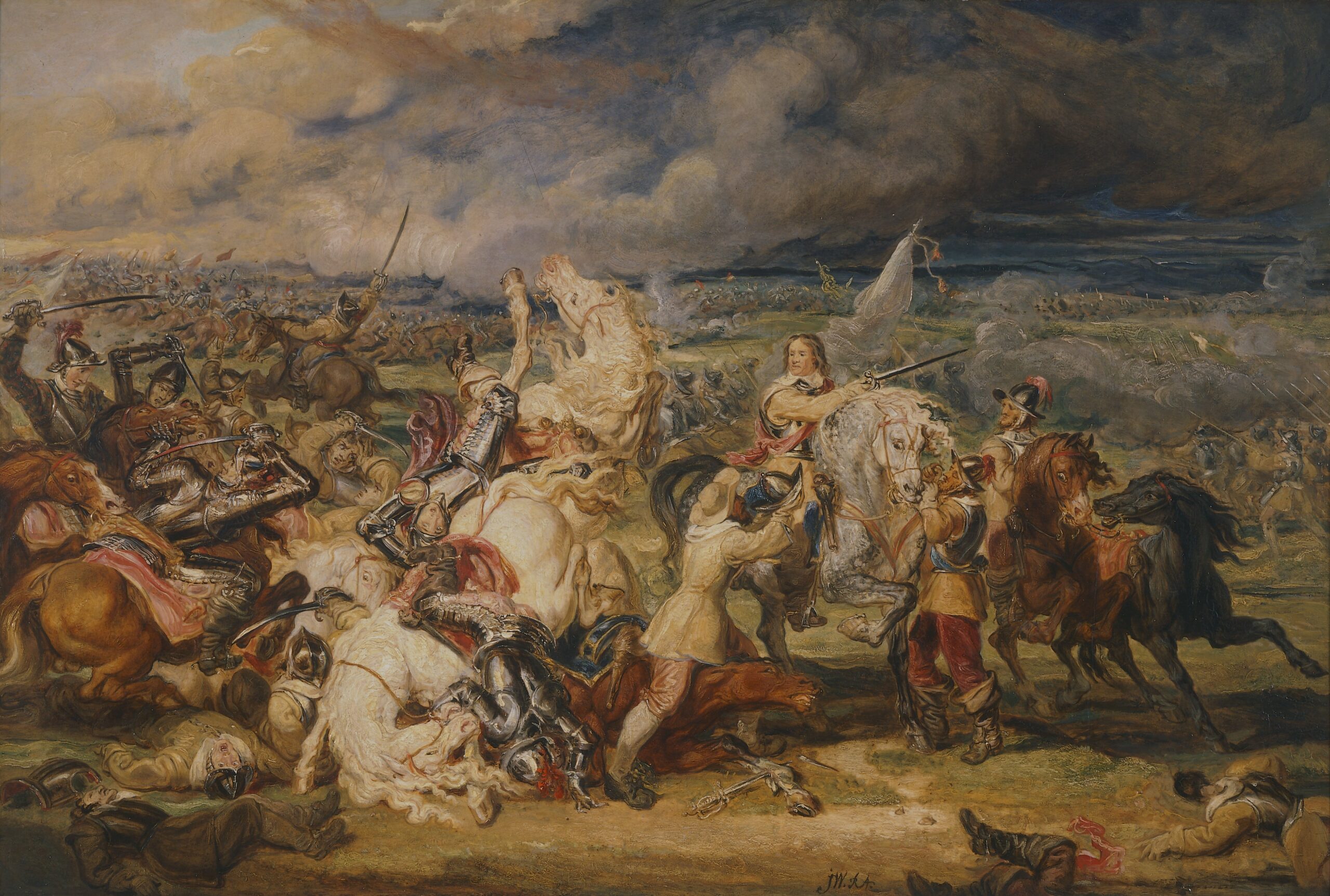
It is doubtful whether Parliament could have won the first Civil War without the assistance of the Scots Covenanters. Royalist successes in England in 1643, combined with the prospect of aid from Ireland for the king, prompted the Scottish Covenanters to sign the ‘Solemn League and Covenant’ in September 1643 as an alliance with the English Parliamentarians. Under the terms of this agreement the Covenanters insisted upon the adoption of Presbyterianism in England, and in return for providing an army of 21,000 men, which played a decisive role in securing the north for Parliament at the Battle of Marston Moor in July 1644. The Royalists hoped for support from Ireland, but the number of troops sent was quite small and for many people in England the king’s willingness to secure support from Catholic Ireland sullied his reputation.
The war also raged in Scotland with a bloody civil war between the Covenanters and those that supported the King. Fighting began in February 1639 when the Covenanters seized Inverness and ended with the surrender of Dunnottar castle near Aberdeen in May 1652. Although the Scottish Royalists were heavily outnumbered they won a string of victories under the command of the inspirational James Graham, Marquis of Montrose, before being decisively defeated by the Covenanters at the Battle of Philiphaugh in September 1645.
Ireland fought its own civil war, often called the Confederate Wars. Between 1642 and 1649, the Irish Confederate Catholics fought against James Butler, Earl of Ormonde and the king’s Protestant armies. In September 1643, the two sides concluded a cease-fire, but failed to negotiate a lasting settlement acceptable to all parties.
In December 1647 King Charles signed an agreement, ‘the Engagement’ with leading Covenanters. In return for the establishment of Presbyterianism in England, the Scots agreed to change sides, leading to a Second Civil War. A Scots army marched into England to support the King in 1648, but was defeated at the Battle of Preston.
Many in the Parliamentarian army saw the resumption of war as the last straw for negotiations with the king, and pushed for his trial. With Charles’ execution in January 1649 many Scots and Irish Royalists simply transferred their allegiance to his son, who was crowned as Charles II, king of the Scots. The third Civil War began as a military campaign in Ireland, with Cromwell being sent with an army in the summer of 1649 to re-establish control. The nine months that followed are the most controversial in Cromwell’s career, but his campaign prevented any significant Irish intervention in the remaining campaigns.
Returning to England, Cromwell was now appointed as Lord General of the Parliamentary forces and led the New Model Army into Scotland in July 1650, defeating the Scots army at the Battle of Dunbar in September. A second Scots force marched into England and joined with English Royalists in an attempt to march on London, but was roundly defeated at the battle of Worcester in September 1651. Charles II was forced to flee to France, leaving Britain in Parliament’s control and bringing to an end the ‘Wars of Three Kingdoms’.